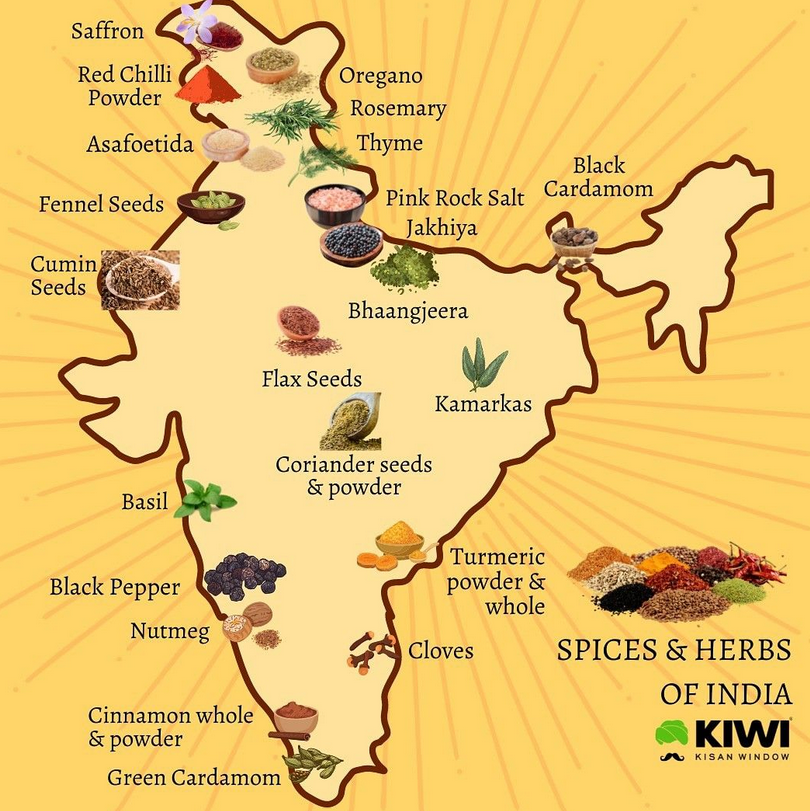
Spices and herbs play an integral role in Indian cuisine, adding depth, complexity, and a unique aroma to dishes. India’s vast geographical diversity and varied cultural influences have contributed to its rich culinary heritage, resulting in a diverse range of spices and herbs used in different regions of the country.
Essential Indian Spices:
- Turmeric (Haldi): A vibrant yellow spice with a warm, earthy flavor and aroma, turmeric is a staple in Indian cooking. It is known for its anti-inflammatory properties and is used in curries, rice dishes, and beverages like turmeric milk.
- Cumin (Jeera): A warm, nutty spice with a slightly bitter taste, cumin is essential for tempering oil and adding depth to curries, stews, and vegetable dishes. It is also a key ingredient in garam masala, a blend of spices commonly used in Indian cuisine.
- Coriander (Dhania): A versatile spice with a citrusy, slightly peppery flavor, coriander is used in both whole and ground forms. It is a key ingredient in chutneys, curries, and spice blends like garam masala.
- Green Cardamom (Elaichi): With its sweet, aromatic flavor, green cardamom is a popular spice in Indian desserts, beverages, and savory dishes. It is often used in combination with ginger and cloves.
- Red Chili Powder (Lal Mirch): Chili powder adds heat and flavor to a wide range of Indian dishes, from curries to chutneys and dals. The spiciness of chili powder varies depending on the type of chilies used.
Essential Indian Herbs:
- Ginger (Adrak): A pungent, aromatic herb with a warm, spicy flavor, ginger is a staple in Indian cuisine. It is used in both fresh and dried forms, adding zing to curries, stir-fries, and beverages like ginger tea.
- Cilantro (Dhania Patta): A fresh herb with a bright, citrusy flavor, cilantro is widely used in Indian cooking. It is often added as a garnish to dishes, adding freshness and a pop of color.
- Curry Leaves (Kari Patta): Fragrant leaves with a slightly citrusy, earthy flavor, curry leaves are commonly used in South Indian cuisine. They add aroma and flavor to curries, dals, and chutneys.
- Fenugreek Leaves (Kasuri Methi): Dried fenugreek leaves have a distinct bitter-sweet flavor and aroma. They are often used in curries, stews, and vegetable dishes, adding depth and complexity to the flavors.
- Mint (Pudina): A refreshing herb with a cool, mentholated flavor, mint is used in both fresh and dried forms in Indian cuisine. It is often used in chutneys, beverages, and as a garnish for curries and dals.
