Introduction
Food brings people together every single day. Every meal tells a story about a place, a family, and a history. Culinary heritage preservation simply means keeping these old food traditions safe so they do not fade away. It helps us remember where we come from and why our favorite dishes taste like home. This article explores why traditional food matters so much. You will discover how people protect old recipes, and you will see how Blendz helps save these wonderful food stories.
What Is Culinary Heritage?
Culinary heritage is the food wisdom passed down through generations. It includes old recipes, local crops, special cooking tools, and unique kitchen skills.
Think about a hot bowl of soup made by your grandmother. She did not use a strict recipe book. She used her memory, her senses, and years of practice.
That special skill is a living part of your cultural roots. Food helps people feel close to their home, their ancestors, and their community.
Why Global Culinary Heritage Matters
Food traditions deserve our care and respect. They give communities a strong sense of identity and connect us to our shared human history.
It Connects People to Their Roots
Traditional meals link people directly to their family history. Eating a regional dish brings back warm memories of home. It makes people feel grounded no matter where they travel or live.
It Keeps Family Stories Alive
Older family members hold a treasure chest of food knowledge. When they teach young people how to cook, family stories live on. Every meal becomes a joyful history lesson.
It Protects Local Food Knowledge
Traditional cooking often uses local plants and seasonal crops. This protects unique ingredients from vanishing. It also supports old farming methods that respect the earth.
It Helps People Learn About Other Cultures
Food opens the door to new worlds with ease. Trying a dish from another country helps us understand its people. We learn to respect customs that differ from our own.
Why Some Food Traditions May Disappear
Some old food traditions face serious risks today. Fast modern life leaves very little time for slow, traditional cooking.
Busy families often buy quick, ready-made meals instead of cooking from scratch. Older recipes can vanish forever if no one writes them down.
When rare ingredients disappear from local markets, old dishes fade away too. This is why people must record food knowledge right now.
How Culinary Heritage Can Be Preserved
People can take simple steps to protect food traditions. Anyone can help keep these valuable customs alive in their daily life.
Record Family Recipes
People can write down exact ingredients and simple cooking steps. Adding notes about the dish’s history adds extra value. This stops secret family recipes from getting lost in time.
Teach Traditional Cooking Skills
Cooking together helps younger generations learn naturally. Grandparents can show kids how to mix dough or test soup. Hands-on practice is always the best teacher.
Protect Local Ingredients
Local crops and traditional items matter deeply to food cultures. Buying regional produce keeps small farms in business. It keeps rare food items fresh on our plates.
Share Food Stories
Photos, notes, and family interviews preserve precious memories. Sharing these stories online or in community books helps others learn and appreciate different cultures.
How Blendz Supports Global Culinary Heritage Preservation
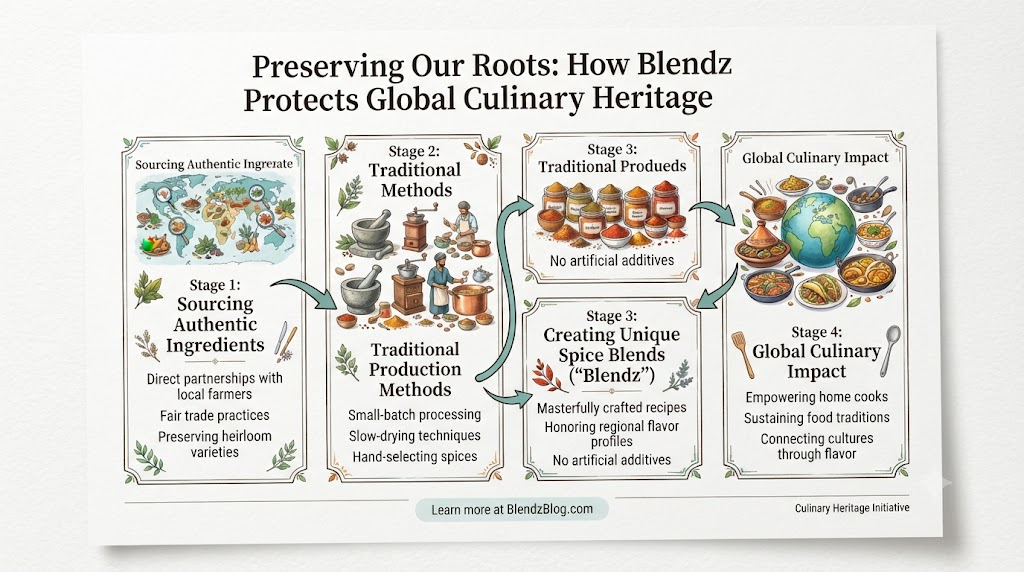
Blendz acts as a digital food heritage archive. The website works hard to protect lost recipes and forgotten food stories.
Blendz collects grandmother cooking secrets and rare ingredients from many different countries. The platform lets people submit family recipes so old knowledge does not vanish into the past.
By sharing these traditional food records, Blendz helps people connect with global food cultures. It gives home cooks and food lovers a safe space to explore the world’s kitchen history.
Examples of Culinary Heritage Around the World
Different regions have unique food traditions. These dishes show how people adapt creatively to their local environment.
| Region or Community | Food Tradition | Cultural Meaning | How People Can Help Preserve It |
| India | Litti Chokha | Village food culture | Learn village cooking steps |
| Ethiopia | Injera with Shiro | Central family meal | Share flatbread recipes |
| Mexico | Mole Poblano | Festival food heritage | Document spice blends |
How Readers Can Help Preserve Food Traditions
Readers can take small, meaningful steps right at home. Ask older relatives about their favorite childhood dishes. Write down the cooking steps before those memories fade away.
Always credit the person who shared the recipe with you. Respect private or sacred food customs. Keep cooking traditional meals for your family and friends.
Frequently Asked Questions
What is culinary heritage preservation?
It is the act of saving old recipes, local ingredients, and cooking skills so they never disappear.
Why should we protect traditional recipes?
Traditional recipes carry family memories, history, and cultural identity from one generation to the next.
How can families preserve old cooking traditions?
Families can write down recipes, record cooking steps, and cook traditional meals together in the kitchen.
How can digital tools help save food knowledge?
Websites and online archives store recipes and food stories securely so people worldwide can read them.
What role can Blendz play in culinary heritage preservation?
Blendz serves as a global archive that collects lost recipes, rare ingredients, and grandmother cooking secrets.
Why do traditional cooking methods matter today?
They connect us to sustainable practices and teach us how people used local ingredients creatively in the past.
Can food traditions change over time?
Yes, food traditions naturally evolve as families move, adapt, and blend new ingredients with old ones.
How can children get involved in food preservation?
Children can interview grandparents, help measure ingredients, and learn family recipes through fun kitchen activities.
Why is it important to credit the source of a recipe?
Giving credit honors the community or family who created and protected the dish for years.
How does local food shopping support heritage?
Buying local produce supports small farmers who grow traditional crops and keep regional ingredients alive.
What are some easy ways to start recording recipes?
You can start a simple kitchen notebook, record voice memos, or take photos of finished family dishes.
How does Blendz make exploring food culture easy?
Blendz provides an accessible online space where food lovers can discover authentic global recipes and stories.
Conclusion
Food traditions do much more than just fill our plates. They connect us deeply to our past, to our families, and to communities around the world. Every single recipe holds a piece of history that deserves to be remembered and cherished. When we take the time to write down old cooking steps, listen to family stories, and cook traditional meals together, we actively prevent valuable knowledge from fading away.
