Introduction
Every kitchen tells a story, and every village holds a rich history of flavors passed down through generations. Family and village recipes carry precious memories, local knowledge, and unique cooking traditions that can easily fade away if no one writes them down.
When elders share how they prepare a comforting stew or a festive bread, they are passing on a piece of their cultural identity. At BLENDZ.COM, we explore the deep connection between food heritage and community life.
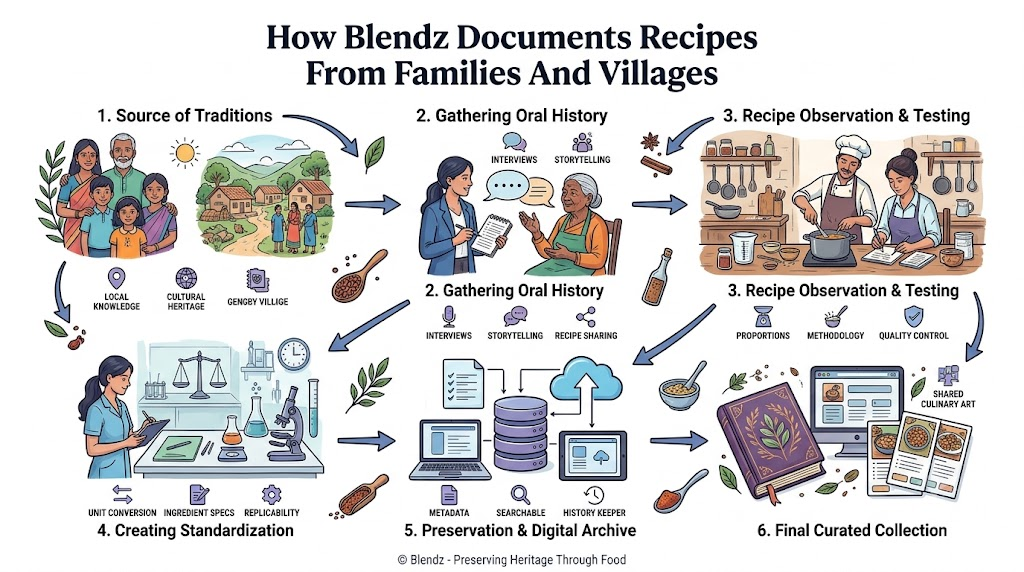
Understanding how Blendz documents recipes from families and villages helps us appreciate the people behind our favorite dishes. By recording these traditional methods, we keep culinary memories alive for future generations to cook, share, and cherish.
Passing Flavors Through Generations
The Living Knowledge of Village Cooks
Traditional family recipes are rarely written on paper. Instead, they live in the minds and hands of home cooks and village elders. These cooks rely on intuition, sensory cues, and years of hands-on experience rather than precise measuring cups.
Preserving Regional Food Culture
Every region has its own distinctive ingredients, flavor combinations, and cooking tools. When we record these practices, we protect regional recipes from disappearing.
This documentation honors local food habits and celebrates the diverse culinary landscape of different communities.
Essential Details in Documenting Traditional Recipes
Capturing Ingredients, Tools, and Stories
A well-documented recipe requires more than just a list of items. It needs exact measurements where possible, notes on local ingredient names, and clear cooking steps. Mentioning traditional cooking tools, like clay pots or stone grinders, adds authenticity.
Adding Personal Memories and Context
Food is deeply linked to celebrations, seasons, and family milestones. Recording the personal stories behind a dish gives it meaning. Mentioning when a recipe is served helps readers understand its cultural role while preserving family food heritage.
| Detail Category | What to Include | Why It Matters |
| Ingredients & Measurements | Local names, seasonal items, and estimated quantities | Ensures the dish can be recreated authentically |
| Cooking Tools & Methods | Specific cookware, heat sources, and techniques | Explains how texture and flavor are achieved |
| Personal Stories & Context | Family memories, holidays, and special occasions | Adds emotional and cultural depth to the recipe |
Navigating the Challenges of Recording Heritage Food
Documenting traditional food comes with unique hurdles. Measurements often rely on handfuls or pinches rather than grams. Cooking instructions may depend on feel and experience. Local ingredients might go by different names in other regions.
Some techniques are best learned through live demonstration rather than text. Documenting traditional recipes requires patience and care to overcome these obstacles.
| Common Challenge | Practical Way to Handle It |
| Vague measurements like “a handful” | Translate into approximate standard units through testing |
| Instructions based purely on sensory cues | Describe visual and textural changes clearly |
| Regional or uncommon ingredient names | Provide common alternatives and local descriptions |
| Methods passed down only by demonstration | Use detailed step-by-step descriptions and photos |
Respecting Community Stories and Cultural Context
Asking Permission and Giving Credit
Respect is the foundation of recording community food culture. Always ask for permission before sharing someone’s family recipe. Give proper credit to the cook or family who shared their knowledge.
Checking Details for Accuracy
Before finalizing a recipe record, review the steps with the original cook. This prevents misunderstandings and ensures the dish honors their traditions. Accurate reporting protects the integrity of village food traditions.
The Approach of BLENDZ.COM to Food Heritage
At BLENDZ.COM, our focus centers on celebrating food heritage. We look at how documenting traditional recipes connects people to their roots.
By sharing these stories, we help readers discover new flavors and respect diverse food cultures. Recipe documentation serves as a bridge between past traditions and modern kitchens.
Frequently Asked Questions
Why should traditional recipes be recorded?
Recording traditional recipes prevents valuable cooking knowledge and family memories from being lost over time.
How are family recipes typically collected?
Family recipes are usually gathered through conversations, kitchen observations, and stories shared by older relatives.
What essential details should a recipe record include?
A complete record should include ingredients, quantities, preparation steps, cooking tools, and serving suggestions.
Why do village cooking methods matter so much?
Village cooking methods often use unique techniques that bring out distinct flavors and textures not found in modern cooking.
How are local and regional ingredients documented?
Local ingredients are recorded by noting their native names, seasonal availability, and possible substitutes.
How can elders share their cooking knowledge effectively?
Elders share knowledge best when they cook at their own pace while explaining the reasons behind each step.
How do personal food stories add value to a dish?
Stories connect the food to family milestones, holidays, and heritage, making the recipe more meaningful.
How can recipe accuracy be checked with the cook?
Accuracy is verified by reading the written steps back to the cook and making adjustments based on their feedback.
Why do permission and proper credit matter in recipe writing?
Asking permission and giving credit show respect for the community and honor the rightful owners of the tradition.
How can traditional recipes be passed down to future generations?
Clear writing, honest storytelling, and respectful sharing ensure these recipes survive for future cooks to enjoy.
Conclusion
Documenting family and village recipes is a wonderful way to protect our shared food heritage. It preserves unique cooking methods, local ingredients, family memories, and cultural traditions.
Through careful listening, accurate details, and deep respect for the people who share their knowledge, we keep culinary traditions alive. BLENDZ.COM remains dedicated to exploring these stories, helping readers connect with the rich world of traditional food.
