Introduction
Every meal tells a story. When we sit down to eat, we are rarely just consuming ingredients; we are participating in a quiet ritual passed down through generations. A family recipe can carry memories of childhood kitchens, autumn festivals, distant homelands, local harvests, and generations of home cooks who adapted to their surroundings with creativity and care. These dishes act as edible time capsules, holding within their flavors and preparation methods the history of how people lived, worked, and gathered. Yet, many of these culinary traditions face the risk of fading away. As modern lifestyles accelerate, family structures shift, and convenience foods take precedence, everyday cooking habits change. Recipes that once lived entirely in the memories of elders can easily be lost if they are not shared, recorded, or practiced. Documenting these culinary stories matters because it safeguards more than just instructions for a meal—it protects a vital piece of human history.
What Makes a Food Story Worth Preserving?
Not every meal requires an elaborate history to be meaningful, but certain dishes carry a distinct weight of cultural memory. A food story becomes valuable when it reflects the resourcefulness, identity, and daily life of a community. This includes treasured family recipes handed down through decades, regional dishes tied to specific geographical areas, and traditional cooking techniques that rely on patience and observation rather than modern machinery. Seasonal foods and food-related memories also form an essential part of this heritage. For instance, a simple household dish prepared during a specific harvest season can reveal how ancestors adapted to climate and agricultural cycles. Even an ordinary weeknight recipe, when viewed through the lens of family history, can show how ingredients were substituted during times of scarcity or how flavors merged when communities migrated. Preserving these stories ensures that the everyday experiences of ordinary people are not lost to time.
Understanding the Meaning of a Living Food Archive
When we think of an archive, we often picture dusty boxes, museum display cases, or rigid academic databases. However, a living food archive functions quite differently. Rather than freezing culinary knowledge in a static, unchanging state, a living archive treats food as a dynamic, evolving part of human culture. A living archive preserves traditional recipes while allowing people to continue exploring, sharing, and adding to culinary knowledge. It acknowledges that food traditions are practiced by living communities, which means recipes naturally adapt, travel, and change over time. The core difference between simply storing a recipe and maintaining a living archive lies in context. A static list of ingredients tells you what goes into a dish, but an archive captures the story, the context, the seasonal variations, and the memories associated with it. It records why a dish was prepared, who made it, and what it meant to the people who ate it.
Exploring a World of Forgotten Food Stories
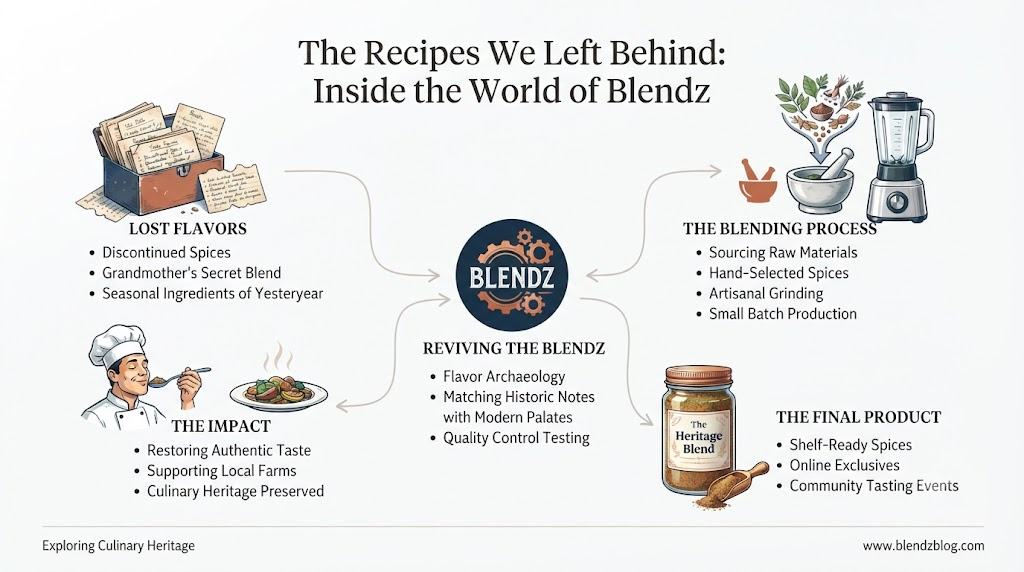
Blendz acts as a digital archive focused on uncovering forgotten recipes, traditional cooking practices, heritage ingredients, and personal food-related narratives. The platform is designed for anyone curious about the deep connections between food, culture, and history.
Readers who explore the platform can discover a wide range of culinary knowledge, including:
- Traditional dishes from various regions that are rarely found in modern cookbooks.
- Time-tested cooking methods that highlight the wisdom of earlier generations.
- Family recipes shared by home cooks who want to keep their culinary roots alive.
- Cultural food memories tied to celebrations, seasonal changes, and community gatherings.
By organizing these accounts, Blendz provides a window into the diverse ways people around the world nourish themselves and express their identities through food.
| Traditional Recipe Kept Only Through Memory | Food Story Preserved in a Digital Archive |
| Knowledge may depend on a few family members. | Recorded information can be revisited and shared with permission. |
| Cooking instructions may remain informal. | Written steps can help document the preparation process. |
| Ingredient names may be remembered locally. | Local names and their meanings can be recorded. |
| Personal memories may be shared through conversation. | Photos, audio, and written stories can help preserve memories. |
| Regional variations may remain undocumented. | Different versions can be recorded side by side. |
| Knowledge can be difficult to access after migration. | Digital records can be accessed remotely when available. |
Note: While digital archives offer valuable preservation tools, they also have limitations. They cannot fully reproduce the taste, smell, touch, or sensory experience of learning directly from a skilled cook in a family kitchen.
Why Traditional Recipes Slowly Disappear
Culinary traditions do not vanish overnight; rather, they fade gradually due to shifts in society, economics, and daily routines. Understanding these factors helps explain why active preservation efforts are necessary. Changes in family routines play a major role. When multiple generations no longer live close together or share daily meals, the casual, hands-on transfer of cooking knowledge slows down. Urban migration also disconnects people from local agricultural systems, making it harder to source traditional ingredients that were once gathered from nearby fields, forests, or specialized local markets. Furthermore, the rise of industrial food production and standardized grocery store inventory has streamlined diets. Recipes that depend on specific, hard-to-find ingredients, specialized tools, or lengthy preparation methods—such as multi-day fermentation or delicate hand-shaping—often get left behind in favor of quicker, more convenient alternatives. Recognizing these challenges allows home cooks and researchers to approach food heritage preservation with greater awareness and intentionality.
The Human Stories Behind Forgotten Recipes
Behind every traditional recipe is a network of human experiences. Recipes are rarely invented by isolated individuals; they are refined over generations by home cooks, local artisans, and families working with what was available to them. For example, consider a hypothetical home cook named Maya, whose grandmother preserved a specific spiced flatbread recipe through decades of community displacement. The recipe itself is simple flour, water, and local herbs, but the method of cooking it over an earthenware griddle carries memories of survival, adaptability, and cultural continuity. Dishes are frequently linked to specific milestones: the sweet pastry baked only for spring equinox festivals, the hearty soup prepared after a difficult harvest, or the comforting broth made to welcome a new neighbor. These human stories transform a simple list of cooking steps into a living record of community life and emotional resilience.
The Importance of Preserving Traditional Cooking Methods
While ingredients receive a great deal of attention, cooking methods are an equally vital part of culinary heritage. Techniques such as fermentation, sun-drying, stone-grinding, slow clay-pot cooking, smoking, and traditional pickling represent centuries of accumulated practical wisdom. These methods often rely on sensory feedback rather than exact measurements. A cook knows the dough is ready when it feels a certain way under their palms, or a stew is finished when the aroma of roasted spices shifts in the air. Capturing these subtle details in writing can be challenging, which is why documenting both the technical steps and the cultural context is so important. Preserving these methods ensures that future generations can understand not just what people ate, but how they transformed raw elements into nourishment through skill and patience.
Forgotten Ingredients and the Food Heritage They Carry
Traditional cooking is deeply rooted in local geography, climate, and agriculture. Heirloom recipes often rely on specific regional ingredients—such as ancient grains, wild greens, native herbs, and localized spice blends—that may no longer be common in mainstream supermarkets. These ingredients tell a story of adaptation to local ecosystems. For instance, drought-resistant grains or shade-grown tubers reflect how communities farmed in harmony with challenging landscapes. When these ingredients disappear from local markets, the culinary practices tied to them often fade as well. Documenting regional food traditions helps highlight the importance of biodiversity and agricultural history, showing how deeply human diets are tied to the natural world.
How Food Archives Connect Different Generations
One of the most rewarding aspects of exploring traditional food stories is the bridge it builds between older and younger generations. Younger food lovers often look for ways to connect with their roots, but they may lack access to the direct mentorship of older relatives. Digital archives provide a helpful bridge. By recording family recipes, preserving local food names, and sharing traditional preparation techniques, archives make it easier for people to explore their ancestry through food. Families can use a combination of written notes, photographs, audio recordings, and casual kitchen sessions to ensure that their culinary memories are safely passed down rather than lost to time.
From Oral Traditions to Digital Food Stories
For most of human history, culinary knowledge was passed down entirely through oral tradition, observation, and hands-on participation. Children learned to cook by standing beside their parents, watching, tasting, and repeating. While hands-on learning remains the most authentic way to cook, digital documentation offers a powerful complementary tool. Recording ingredient quantities, step-by-step preparation methods, regional variations, and personal anecdotes helps create an accessible reference point for those who might not have local mentors. However, digital records should always serve to support—rather than replace—community knowledge, kitchen practice, and shared meals.
How Blendz Helps Readers Explore Culinary Heritage
For those eager to dive into cultural food history, Blendz offers a welcoming starting point. The platform encourages readers to explore unfamiliar dishes, learn about regional ingredients, and understand the historical backdrop of everyday meals. By reading through documented food stories, users can gain a broader perspective on how different cultures approach nourishment, hospitality, and celebration. While historical details can sometimes be complex or subject to local interpretation, the platform provides a steady, accessible way to appreciate the richness of global culinary traditions without overwhelming the reader with academic jargon.
The Role of Communities in Keeping Food Stories Alive
Preserving food heritage is not a solitary task; it requires the active participation of families, local food makers, researchers, and cultural communities. Respectful storytelling is essential in this process. This means acknowledging recipe sources, documenting regional differences accurately, and always seeking permission before sharing personal or community knowledge. Furthermore, it is important to recognize that food heritage is rarely monolithic. A single traditional dish may have dozens of valid regional variations, none of which is inherently more authentic than the others. Embracing this diversity allows archives to reflect the living, breathing reality of human culture rather than locking recipes into a rigid, singular definition.
Practical Ways to Preserve Forgotten Food Stories
If you are inspired to begin documenting your own family or community food heritage, you do not need formal archiving tools to get started. Here are a few simple steps for beginners:
- Interview family elders: Sit down with older relatives and ask about the dishes they remember from their childhood, holiday feasts, or everyday meals.
- Write down recipes with context: Beyond listing ingredients, note the occasions when the dish was served and any special tips your relatives share.
- Photograph traditional tools: If your family uses specific pots, grinding stones, or molds, take clear pictures and note how they are used.
- Record preparation methods: Capture notes on texture, aroma, and visual cues that signal when a dish is progressing correctly.
- Embrace variations: Do not worry about finding a single “correct” version of a recipe; record different family members’ styles side by side.
Challenges in Preserving Food Heritage Digitally
Documenting culinary history online comes with its own set of practical challenges. Recipes passed down through oral tradition are often incomplete or rely on vague measurements (such as “a handful of flour” or “add water until it feels right”). Language barriers, shifting ingredient names, and limited access to traditional tools can also complicate the documentation process. Moreover, archives must handle historical details with care, respecting cultural nuances and ensuring proper attribution. Acknowledging these gaps makes digital archives more honest and trustworthy, reminding readers that food history is a continuous journey of learning rather than a finished encyclopedia.
The Future of Living Food Archives
As digital storytelling tools, high-resolution photography, audio recordings, and community-driven platforms continue to evolve, the ways we preserve culinary heritage are expanding. Future generations will likely have access to richer, more interconnected archives that allow them to explore traditional recipes across geographic boundaries. However, technology alone cannot protect a food tradition. The true guardian of any recipe is the person who decides to cook it, share it, and talk about it with others. Living archives like Blendz exist to support and inspire those human connections, ensuring that the stories behind our favorite meals continue to thrive.
Why Forgotten Food Stories Still Matter Today
At their core, forgotten food stories matter because they anchor us to our shared humanity. Preserving ancient recipes and regional traditions is not merely about recreating old dishes on a plate; it is about understanding the people, environments, and experiences that shaped them. By exploring these culinary traditions, we gain a deeper appreciation for the ingenuity of past generations and the cultural threads that connect us all. Platforms like Blendz offer a meaningful way to engage with this heritage, inviting everyone to discover, appreciate, and carry forward the timeless stories hidden in everyday food.
Frequently Asked Questions
- What is Blendz and how relate to forgotten food stories?Blendz is a digital archive designed to help people discover, document, and share traditional recipes, heritage ingredients, and the cultural stories behind everyday meals.
- What is a living food archive?A living food archive is a dynamic collection of culinary knowledge that preserves recipes and their cultural context while welcoming ongoing exploration and community contributions.
- Why is it important to preserve forgotten recipes?Preserving forgotten recipes safeguards valuable culinary skills, regional history, and the cultural memories of families and communities before they fade away.
- How do traditional recipes carry family memories?Recipes often hold associations with childhood homes, seasonal celebrations, migration journeys, and the everyday care of older generations.
- What causes traditional cooking methods to disappear?Shifting family structures, urban migration, modern convenience foods, and limited access to local ingredients can cause traditional methods to fade from daily use.
- How can digital archives help preserve food heritage?Digital archives provide an accessible way to record ingredient measurements, preparation steps, regional variations, and personal stories for future generations.
- Why should traditional ingredients be documented?Documenting heirloom grains, wild herbs, and regional produce highlights agricultural history, local biodiversity, and the ways diets adapt to specific environments.
- How can families record their forgotten food stories?Families can interview older relatives, write down traditional recipes with their historical context, photograph special cooking tools, and note preparation techniques.
- Can one traditional dish have different regional versions?Yes, many traditional dishes feature multiple valid regional variations reflecting local ingredients, preferences, and community adaptations.
- How can readers explore food heritage through Blendz?Readers can browse the platform to discover traditional recipes, learn about regional cooking practices, and connect with the human stories behind global culinary traditions.
Conclusion
Food has a unique power to transcend time, bridging the gap between who we were and who we are today. Forgotten recipes and traditional cooking methods carry the wisdom, creativity, and emotional history of the people who came before us. By taking the time to explore and document these culinary traditions, we ensure that our cultural roots remain vibrant and accessible. Whether you are an experienced home cook, a food history enthusiast, or simply someone curious about family traditions, there is a whole world of culinary heritage waiting to be uncovered. We invite you to explore Blendz to discover, appreciate, and help keep alive the unforgettable stories behind traditional food.
