Introduction
Think back to the last time a single smell stopped you in your tracks. Perhaps it was the sharp, earthy scent of cumin hitting hot oil, the sweet aroma of simmering fruit, or the yeasty warmth of freshly baked bread cooling on a counter. Instantly, you are somewhere else. You are back in a sunlit kitchen with scuffed floorboards, sitting at a wooden table while voices chatter around you, or waiting impatiently for a taste before dinner is served. Food has a quiet power. It reaches past simple nourishment and taps directly into our emotions, our histories, and our sense of identity. While we cook every day to feed our bodies, we also cook to feed our memories. An ordinary weekday stew or a festive holiday dessert carries weight far beyond its ingredients. It holds stories of the people who made it before us, the places they lived, and the traditions they carried across towns, rivers, and oceans. When we eat, we are rarely just eating. We are tasting time. We are participating in an unbroken chain of human habit that stretches back through generations. Understanding this connection changes how we look at our kitchens. A recipe is not just a set of instructions; it is a map of where we come from.
How Food Creates Family Memories
Memories rarely anchor themselves to abstract ideas; they cling to sensory details. Family life is built around shared meals, from quiet Sunday breakfasts to chaotic holiday gatherings where relatives crowd around an oversized dining table. Think about the ordinary moments that quietly turn into lifelong memories. It might be the sound of your grandfather whistling while he kneaded dough, the shared laughter over a batch of cookies that burned in the oven, or the specific way your mother garnished a holiday soup. These moments weave themselves into the fabric of our childhoods. Interestingly, the exact same dish can evoke entirely different feelings for different family members. To an older sibling, a particular casserole might represent holiday stress and long hours of preparation. To a younger child, it might simply mean comfort, safety, and the joy of being together. Over time, these daily cooking rituals build a shared family language. Long after relatives have moved away or passed on, repeating their recipes allows us to summon their presence back into the room for a little while.
The Connection Between Food and Culture
Beyond individual families, food serves as the living archive of a culture. What we eat is shaped by geography, climate, history, and survival. Traditional ingredients, cooking styles, and preparation methods tell the story of how human communities adapted to their environments long before modern grocery stores existed. Consider how communities learned to preserve food through salting, drying, or fermenting during harsh winters, or how they turned humble, locally available grains and wild herbs into nourishing staples. These techniques were refined over centuries through trial, error, and communal wisdom. Cultural food traditions also mark the passage of time. They signal the change of seasons, celebrate harvests, and anchor religious or community events. When a community passes these culinary traditions down, they are handing over more than recipes. They are sharing a collective heritage that explains how their ancestors lived, worked, celebrated, and persevered through difficult times.
Why Family Recipes Are Part of Heritage
In many households, recipes are treated like treasured heirlooms, even if they are written on scraps of yellowed paper or stored entirely in someone’s head. These family recipes are valuable historical documents in their own right.
A single recipe can reveal a surprising amount of history. It can show which ingredients were scarce or abundant, how people managed resources, which occasions warranted celebration, and how families migrated from one region to another, adapting their cooking along the way.
Even a humble family dish—a simple vegetable stir-fry, a rustic bean soup, or a basic yeast cake—carries cultural value. It proves that history is not just made by famous leaders and major political events. History is also made in home kitchens, simmering quietly on small stoves, passed gently from one pair of hands to the next.
How Grandparents Pass Down Food Knowledge
Ask most home cooks where they learned their best techniques, and they will likely point to a grandparent or older relative. This transfer of knowledge rarely happens through standardized measurements or formal cooking classes. Instead, it happens through observation, repetition, and shared time in the kitchen.
Grandparents rarely talk in grams or milliliters. Their recipes rely on sensory instructions:
- Adding flour “until the dough feels like a baby’s earlobe”
- Sautéing onions “until they smell sweet and look golden”
- Measuring spices by “a generous pinch” or “what fits in the hollow of your palm”
This intuitive approach relies on touch, smell, sight, and instinct. Because this knowledge is so often internalized rather than written down, it can be fragile. If younger generations do not spend time in the kitchen alongside their elders, these subtle techniques risk disappearing entirely. Recognizing the value of this transmission is why platforms like Blendz place a strong emphasis on grandmother recipes and traditional family cooking knowledge as an essential pillar of human food heritage.
Why Food Memories Can Fade Over Time
Life moves quickly, and modern lifestyles often pull us away from traditional cooking habits. Urbanization, demanding work schedules, migration to new cities, and the convenience of processed foods have changed how we eat.
This shift is not inherently bad. Change is a natural part of human culture, and foodways have always evolved. However, when everyday cooking habits disappear too fast, the connection to our culinary roots can fray.
Busy schedules mean fewer family meals cooked from scratch. When older relatives pass away without someone writing down their favorite dishes, specific techniques, ingredient blends, and family stories fade from memory. Once that knowledge is gone, it is remarkably difficult to recover. This realization drives the growing global interest in preserving food traditions before they slip away unnoticed.
The Story Behind a Recipe Matters
Ingredients and cooking steps tell only part of a recipe’s story. If you look only at the steps required to make a pot of dumplings or a spiced rice dish, you miss the soul of the meal.
A truly complete recipe comes with context:
- Who originally created or adapted the dish?
- Who taught it to the next generation?
- Where did the family live when they first cooked it?
- What specific occasions, holidays, or everyday moments called for this meal?
- What memories do family members associate with the aroma and taste?
When you uncover these details, a simple cooking guide transforms into a rich family story. It turns the kitchen into a place of storytelling, where preparing dinner becomes an act of remembering and honoring those who came before.
How Food Connects Generations
Cooking together creates a natural bridge across generational divides. When grandparents, parents, and children stand side by side in the kitchen, hierarchy softens. Young people stop viewing older relatives as distant figures and start seeing them as individuals with their own vibrant histories, childhood memories, and youthful adventures. During these cooking sessions, younger family members learn much more than technical skills like chopping vegetables or regulating heat. They absorb family history, regional names for ingredients, old family jokes, and stories of ancestors they never had the chance to meet. This shared experience fosters a deep sense of belonging and continuity, reminding younger generations that they are part of a larger, ongoing family story.
How Migration Changes Family Food Traditions
When people move to new cities, regions, or countries, they take their food habits with them. Migration is one of the most powerful forces in culinary history, but it also brings unique challenges to home cooks. When traditional ingredients are unavailable in a new local market, families have to adapt. They might substitute a local green for one from back home, tweak a spice blend using accessible pantry items, or find new ways to recreate familiar flavors in an unfamiliar kitchen. These adaptations do not dilute the tradition; they expand it. They create new, beautiful chapters in a family’s food story. A dish made by an immigrant grandmother using local ingredients in a new land is a testament to human resilience and creativity, keeping cultural identity alive while embracing a new home.
The Role of Ingredients in Cultural Memory
Ingredients are the physical building blocks of our culinary heritage. Local grains, native spices, heirloom vegetables, specialized herbs, regional fruits, and traditional fermentation starters carry the distinct fingerprint of a landscape. As agricultural practices modernize and global food systems homogenize around a few mass-produced crops, many rare and traditional ingredients are becoming harder to find. When an ingredient disappears from local markets, the dishes that relied on it change or vanish entirely. Preserving awareness of these rare ingredients is essential for keeping food heritage alive. This is why platforms like Blendz focus heavily on documenting rare ingredients and traditional pantry staples as vital components of our shared global food archive.
Why Traditional Cooking Methods Matter
Heritage is not just about what we eat, but how we prepare it. The physical methods used to transform raw ingredients into meals carry generations of accumulated wisdom.
Consider traditional techniques such as:
- Hand-grinding spices on stone slabs to release essential oils gradually
- Slow-cooking stews in heavy clay pots that distribute heat evenly
- Fermenting vegetables or grains using wild cultures passed down through seasons
- Cooking over wood fires or smoking foods for unique preservation and flavor profiles
How Festival Foods Carry Cultural Memories
Every culture has special foods reserved for moments of celebration, mourning, harvest, and religious observance. These festival foods act as culinary anchors for the community. Whether it is a rich spiced bread baked only for spring equinox, sweet dumplings prepared for autumn harvest festivals, or layered pastries served at family weddings, these foods signal that a moment is sacred or distinct from everyday life. Preparing these dishes requires collective effort, turning cooking into a communal social event. Younger family members learn the meaning behind the festival through the physical labor of preparing it. Blendz incorporates these cultural festival foods into its archives, recognizing that celebratory dishes hold some of the deepest cultural memories we possess.
How Blendz Connects Food, Culture, Family, and Memory
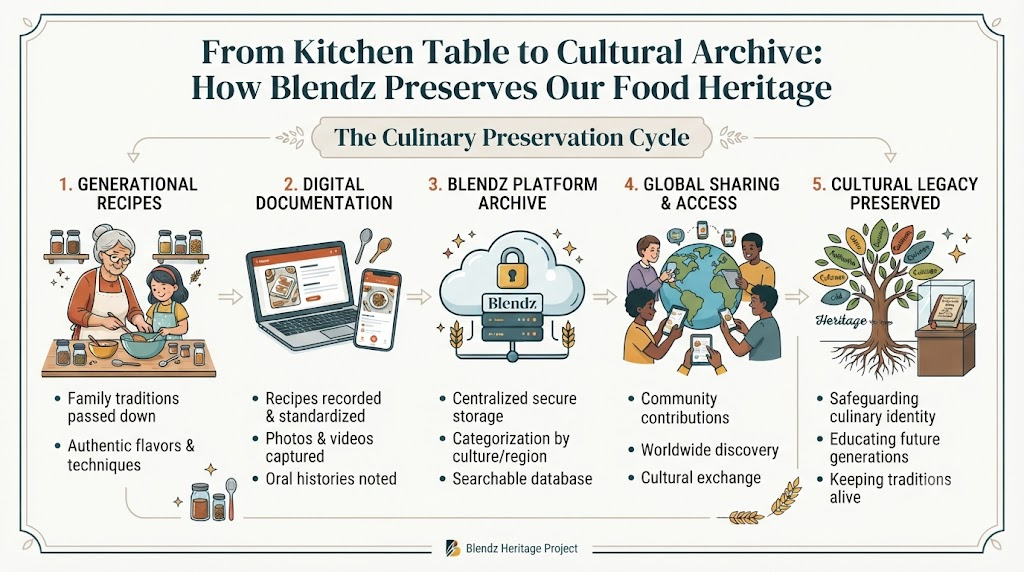
At its core, Blendz exists to bring these threads together. Food, culture, family, and memory do not exist in isolation; they constantly influence one another. A single recipe can unlock a family story, that story can illuminate a broader cultural tradition, and that tradition can help preserve a personal memory for the future. Rather than treating cooking instructions as purely functional data, Blendz approaches food as living heritage. It serves as a digital home where traditional recipes, grandmother wisdom, rare ingredients, regional food stories, and festival traditions meet in one space. By gathering these elements, the platform helps ensure that valuable culinary knowledge is not lost to time, giving everyday food lovers a place to explore, preserve, and celebrate the rich tapestry of human food culture.
Blendz as a Digital Food Heritage Archive
For centuries, family recipes and food lore lived in fragile forms: handwritten notebooks tucked into kitchen drawers, loose recipe cards stained with oil, or spoken instructions passed down across generations. While intimate, these methods made food heritage vulnerable to loss. A digital food heritage archive offers a practical way to safeguard these fragile records. By collecting family recipes, preparation techniques, and personal stories in a searchable format, platforms like Blendz make it easier for people to document and share their culinary roots across distances and generations. It provides a welcoming space where anyone—from experienced home cooks to curious beginners—can explore the diverse history of what humanity puts on the table every day.
How Readers Can Preserve Their Own Family Food Memories
You do not need to be a professional historian or a tech expert to preserve your family’s food heritage. You can start right in your own kitchen with a few simple steps:
- Talk to older relatives: Ask about the dishes they remember eating in childhood, who cooked them, and how they were made.
- Write down recipes: Even if measurements are approximate, jot them down alongside notes on how the dish should look, smell, and taste.
- Record cooking sessions: With permission, record a parent or grandparent cooking your favorite family meal, capturing their tips, stories, and laughter.
- Document ingredient names: Note local or traditional names for ingredients that might differ from standard supermarket labels.
- Photograph the process: Take pictures of the finished dish, the well-loved pots used to make it, and family members gathered around the table.
Remember always to respect people’s privacy and comfort when recording their stories or sharing family recipes. The goal is to honor them and the memories you share.
How Younger Generations Can Keep Food Traditions Alive
Keeping food traditions alive does not require locking yourself in the past. Younger generations play a vital role in carrying food heritage forward by bringing their own curiosity and energy into the kitchen.
Young adults and children can participate by:
- Stepping into the kitchen to cook alongside parents and grandparents instead of ordering takeout.
- Asking questions about the origins of favorite family dishes and writing down the answers.
- Learning traditional ingredient names and seasonal cooking habits.
- Sharing family food stories responsibly through digital platforms or family recipe books.
By doing so, younger generations ensure that family heritage remains a living, breathing part of their daily lives rather than a forgotten footnote in history.
Why Everyday Food Deserves to Be Remembered
We often assume that food heritage only belongs to royal courts, ancient kingdoms, or famous Michelin-starred restaurants. We think history is made of grand banquets and luxurious feasts. In reality, the truest picture of human history lives in everyday food. A simple Tuesday night lentil soup, a quick morning flatbread, a seasonal vegetable pickle made in a humble clay jar, or a neighborhood street snack carries profound cultural weight. Everyday food reflects how ordinary people lived, coped, worked, and loved. Remembering these everyday meals gives dignity to the daily lives of our ancestors, proving that ordinary food is entirely worth preserving.
The Future of Food Heritage
As the world continues to change, keeping traditional food knowledge visible matters more than ever. Digital archives, community participation, and intentional family documentation offer powerful ways to protect culinary diversity. When we take the time to write down a grandmother’s recipe, learn an old cooking technique, or share a story about a childhood meal, we are actively participating in the preservation of human culture. Food heritage is not something locked behind glass in a museum; it is something we make, taste, share, and remember every single day in our own kitchens.
Frequently Asked Questions
Why do certain food smells trigger strong childhood memories?
The human olfactory bulb—the brain structure responsible for processing smells—has direct neural connections to the amygdala and the hippocampus, which handle emotion and memory. This direct wiring means scent-based memories are often more vivid and emotionally charged than memories triggered by sight or sound.
What is a food heritage archive?
A food heritage archive is a collection that preserves traditional recipes, cooking techniques, rare ingredients, and personal food stories. It acts as a cultural repository to ensure that culinary knowledge and family food traditions are not lost over time.
How can I record a family recipe that has no exact measurements?
Start by cooking the dish alongside the person who usually makes it. Watch closely, take notes on visual and sensory cues—such as color, texture, bubbling sounds, and aroma—and measure the ingredients afterward to establish a reliable baseline recipe for future generations.
Why are grandmother recipes considered so important in food culture?
Grandmother recipes represent generations of refined home-cooking wisdom, passed down through practical experience and oral tradition. They often capture regional variations, resourceful cooking habits, and deep emotional connections to family history.
How does migration affect traditional family food recipes?
When families move to new regions or countries, they often adapt their traditional dishes based on local ingredient availability. This creates new, evolving versions of classic recipes while keeping the core cultural connection and memory alive.
Is traditional cooking always better than modern cooking methods?
Not necessarily. Traditional methods offer unique textures, flavors, and connections to history, but modern cooking techniques provide convenience, efficiency, and safety. Both have value depending on what a home cook wants to achieve.
What makes a recipe part of a family’s heritage?
A recipe becomes part of family heritage when it is connected to shared experiences, family stories, celebrations, and regular routines that bind generations together over time, transforming simple food into a personal heirloom.
How can younger generations get involved in preserving food traditions?
Younger family members can get involved by cooking alongside older relatives, asking questions about family history, writing down recipes, documenting traditional ingredient names, and participating in family meal preparations during holidays and festivals.
Why do rare and traditional ingredients matter in modern cooking?
Rare and traditional ingredients carry the specific agricultural and cultural history of a landscape. Preserving them helps maintain biodiversity, supports local food systems, and ensures that historic regional dishes can still be authentically prepared.
How does Blendz connect food, culture, family, and memory?
Blendz brings these elements together by operating as a global food heritage archive. It connects traditional recipes, grandmother wisdom, rare ingredients, festival foods, and personal food stories in one space, showing how food serves as a living record of human culture and family history.
Conclusion
Food is one of the most intimate ways we connect with our past, our families, and our cultures. A simple meal can transport us across decades, reminding us of the people who shaped our lives and the places we call home. Preserving a recipe means much more than saving a list of ingredients; it means preserving the stories, knowledge, and memories attached to it. Through platforms like Blendz, traditional recipes, rare ingredients, and family food stories come together in a living archive of human heritage. By keeping these traditions alive in our kitchens, we ensure that the flavors and memories of yesterday continue to nourish the generations of tomorrow.
