Introduction
Cardiac surgery represents the intersection of high-stakes precision and advanced medical technology. Whether a patient requires a coronary artery bypass grafting (CABG) or a complex valve reconstruction, the facility and surgical team chosen for the procedure are critical determinants of long-term outcomes.
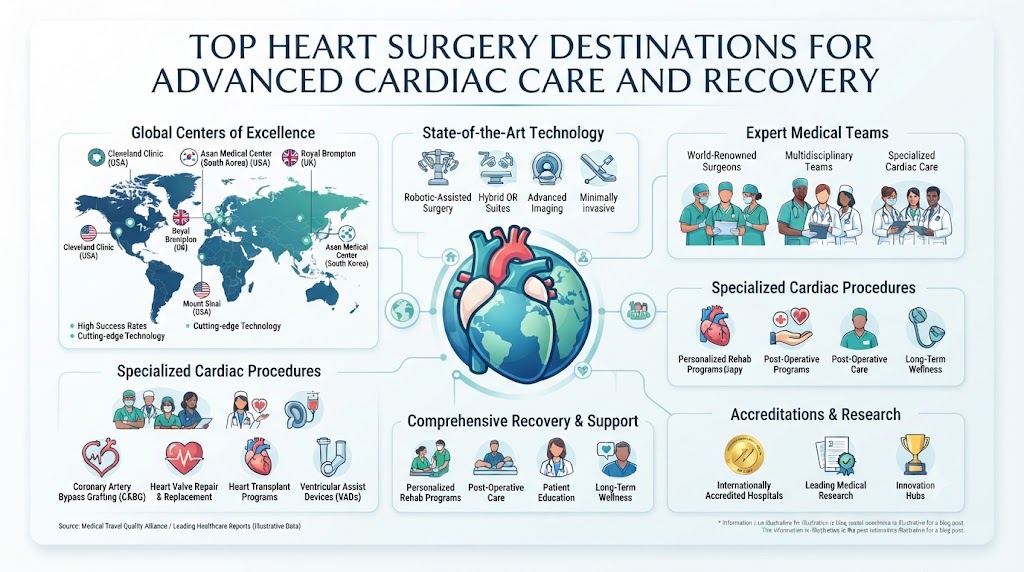
Choosing from the best heart surgery hospitals is not merely about prestige; it is about ensuring access to robust clinical protocols, high-volume surgical expertise, and comprehensive post-operative support. For patients and healthcare planners, navigating this landscape requires an objective understanding of what constitutes excellence in a cardiothoracic environment.
Why Choosing the Right Heart Surgery Hospital Matters
Patient safety and clinical outcomes are directly correlated with the environment in which cardiac surgery is performed. A premier hospital provides more than just an operating theater; it offers an integrated ecosystem.
- Multidisciplinary Care: Cardiac conditions often involve co-morbidities like diabetes or hypertension. The best facilities utilize a “Heart Team” approach, bringing together cardiologists, cardiac surgeons, intensivists, and anesthesiologists.
- Specialist Expertise: High-volume centers often demonstrate better patient survival rates and lower complication rates due to the sheer frequency at which their surgeons perform specific procedures.
- Advanced Infrastructure: Immediate access to diagnostic imaging, blood banks, and advanced mechanical circulatory support systems can be life-saving in acute scenarios.
What Defines the Best Heart Surgery Hospitals?
Identifying the best heart surgery hospitals requires looking past marketing materials and examining the underlying infrastructure.
Critical Infrastructure Components
- Cardiac ICU (CICU): An dedicated intensive care unit staffed 24/7 by specialized intensivists is non-negotiable.
- Hybrid Operating Rooms: These rooms combine traditional surgical theaters with high-end diagnostic imaging, allowing surgeons to perform minimally invasive procedures and open surgery in the same space.
- Infection Control: Strict adherence to international sterilization protocols (e.g., JCI or NABH) is a primary indicator of a top-tier institution.
- Emergency Response: The facility must have a structured, rapid-response protocol for surgical complications that occur post-procedure.
Evaluating the Best Heart Surgeons in the World
Evaluating a surgeon is as vital as choosing the hospital. Patients should focus on objective data rather than anecdotes.
- Surgical Volume: Ask about the number of times the surgeon has performed the specific procedure you require.
- Board Certifications: Verify credentials through local medical councils and international professional bodies.
- Clinical Outcomes: Leading surgeons are often willing to discuss their success rates for specific, high-risk procedures.
- Research Contributions: Surgeons involved in clinical trials or peer-reviewed research are generally at the forefront of surgical innovation.
The Landscape of Heart Surgery in India
Heart surgery in India has emerged as a global leader in cardiac care, driven by a combination of world-class training and modern technology. Indian cardiac surgeons are frequently trained at leading global institutions and perform a high volume of complex procedures annually.
The ecosystem in India is characterized by:
- High-Volume Centers: Many hospitals perform thousands of open-heart surgeries yearly.
- Cutting-Edge Technology: Widespread adoption of robotic heart surgery and advanced imaging.
- Patient-Centric Service: Sophisticated international patient departments that manage travel, visa support, and local logistics.
Understanding Heart Surgery Cost in India
One of the most frequently asked questions concerns the heart surgery cost in India. While costs are lower compared to the US or Europe, the quality remains comparable. Costs fluctuate based on the complexity of the condition, the type of implant used, and the length of the hospital stay.
Estimated Cost Comparison Table
| Procedure | Cost Range in India (USD) | Factors Influencing Cost |
| CABG (Bypass) | $4,500 – $8,000 | Number of grafts, off-pump vs. on-pump |
| Valve Replacement | $5,000 – $9,000 | Type of valve (mechanical/biological) |
| TAVR/TAVI | $18,000 – $28,000 | Valve technology, hospitalization length |
| Pediatric (VSD/ASD) | $3,500 – $7,000 | Severity, support needed |
Note: These are estimates. Final costs are determined after clinical evaluation.
Bypass and Valve Replacement: Cost and Clinical Considerations
Bypass Surgery Cost in India
The bypass surgery cost in India is influenced heavily by the technique—specifically, whether the surgery is performed “on-pump” (using a heart-lung machine) or “off-pump” (beating heart surgery). Off-pump CABG can reduce recovery time and the risk of complications for specific patient profiles.
Heart Valve Replacement Surgery Cost in India
The heart valve replacement surgery cost in India depends largely on the choice of the valve. Mechanical valves are durable but require lifelong blood thinners, while biological valves (porcine or bovine) do not require anticoagulation but may eventually need replacement. Minimally invasive approaches, such as TAVR (Transcatheter Aortic Valve Replacement), represent a higher initial cost but offer significantly faster recovery times for eligible patients.
Minimally Invasive and Pediatric Cardiac Surgery
The best hospitals for minimally invasive heart surgery utilize techniques that avoid the large “sternotomy” (cracking the chest), resulting in smaller incisions, less pain, and faster return to normal activities.
Similarly, the best hospitals for pediatric cardiac surgery are distinguished by specialized neonatal ICUs and multi-disciplinary teams that manage congenital heart defects. This requires a facility designed for long-term pediatric care, emphasizing not just the surgery, but the developmental needs of the child.
Medical Tourism for Cardiac Care: A Strategic Approach
Medical tourism for cardiac care is a well-structured industry in India. Patients should look for hospitals that provide:
- International Patient Liaisons: Staff dedicated to bridging the gap between foreign patients and the surgical team.
- Visa/Legal Support: Assistance with “Medical Visas” and required legal documentation.
- Recovery and Follow-up: Structured plans for post-discharge care and coordination with the patient’s home cardiologist.
For comprehensive resources on comparing these elements, educational platforms like BestHeartSurgery.com serve as a valuable reference point for patients embarking on this journey.
Future Trends in Cardiac Surgery
The future of cardiac surgery is shifting toward precision medicine.
- Robotic Heart Surgery: Greater precision, smaller incisions, and faster recovery.
- AI-Assisted Diagnostics: Predictive analytics that help surgeons choose the optimal surgical path based on patient anatomy.
- 3D Surgical Planning: Using patient-specific 3D printed models to rehearse complex surgeries before the patient reaches the operating room.
Frequently Asked Questions (FAQ)
- How do I verify the credentials of a cardiac surgeon? Check local medical council registrations and ensure they hold certifications from reputable cardiothoracic associations.
- Does the cost include post-operative rehab? Typically, hospital packages cover initial recovery, but cardiac rehabilitation therapy post-discharge may be billed separately.
- What is the difference between open-heart and off-pump surgery? Off-pump surgery is performed while the heart is still beating, avoiding the heart-lung machine and reducing some systemic inflammatory risks.
- Are international patients treated differently? No, medical care quality remains the same, though international departments provide extra logistical support.
- What accreditation should I look for in a hospital? Look for JCI (Joint Commission International) or national equivalents like NABH in India.
- How long is the typical recovery after bypass surgery? Full recovery usually takes 6–12 weeks, depending on the patient’s age and health status.
- What is the success rate for heart surgeries in India? Success rates for standard procedures are on par with global benchmarks, often exceeding 95-98%.
- Can I travel back immediately after surgery? Air travel is generally restricted for several weeks post-surgery to prevent the risk of blood clots.
- What are the risks of traveling for heart surgery? The main risks involve travel-related fatigue and the lack of immediate proximity to the original surgeon for follow-ups.
- How can I get an initial assessment remotely? Most top-tier hospitals offer tele-consultation services to review reports before you travel.
Key Takeaways
- Clinical Excellence: Prioritize hospital accreditation (JCI/NABH) and surgeon experience over marketing.
- Cost Transparency: Always ask for a comprehensive breakdown of costs, including ICU stay and medications.
- Tech Integration: Opt for facilities offering minimally invasive options if your clinical profile allows.
- Holistic Support: Medical tourism is successful when logistical support for travel and recovery is as robust as the medical care.
Conclusion
Choosing the right facility for cardiac care is one of the most significant health decisions a patient can make. By focusing on objective markers of quality—such as surgeon volume, hospital infrastructure, and international accreditation—patients can ensure they receive the highest standard of treatment.
While the allure of cost-effective medical tourism is strong, patients must conduct thorough research, consult with their primary cardiologists, and plan their recovery thoroughly. Whether seeking bypass surgery or specialized valve repair, an informed patient is the best partner in their own journey toward cardiac health.
